
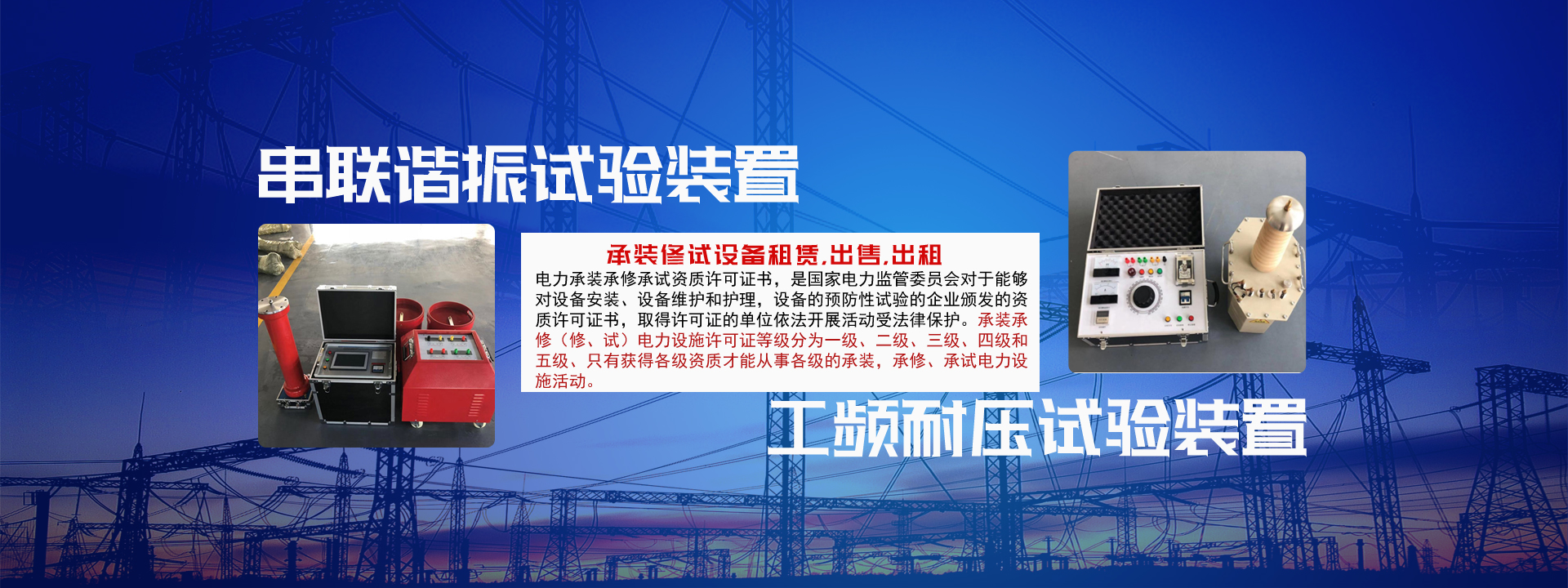
The winding deformation tester is a specialized instrument used to detect the internal winding condition of electrical equipment such as transformers and motors. By precisely measuring the inductance parameters of the winding, it helps technicians identify winding deformation caused by short-circuit current surges, transportation vibrations, or improper installation. Such testing is crucial for ensuring the safe operation of power equipment and effectively preventing major accidents caused by winding faults.
I. Working Principle
The winding deformation tester is mainly based on the Frequency Response Analysis (FRA) method. It evaluates the winding condition by injecting a series of signals of different frequencies into the winding under test and recording the winding's response to these signals during the process. The specific steps are as follows:
Signal Injection: Apply a series of AC signals of known frequencies to one end of the winding.
Response Acquisition: Simultaneously collect the signal response after passing through the winding at the other end.
Data Analysis: Compare the original and current frequency response curves; any differences may indicate physical changes in the winding, such as displacement, loosening, or deformation.
II. Application Fields
Power System Maintenance: Regularly inspect the winding condition of transformers in substations to detect potential problems early and avoid sudden failures.
Manufacturing Quality Control: Perform final inspection on newly produced transformers at the end of the factory production line to ensure product quality meets design standards.
Post-Accident Assessment: When power equipment is affected by natural disasters or unexpected events, the winding deformation tester can quickly determine the extent of damage, providing a basis for repair decisions.
III. Technical Features
High-Precision Measurement: Capable of accurately capturing subtle changes in frequency response with high sensitivity.
Non-Invasive Detection: Testing can be completed without disassembling the equipment, saving time and cost.
Portable Design: Many modern winding deformation testers are compact and easy to carry for on-site operations.
Automation Functions: Support one-click automatic testing and data processing, simplifying the operation process.
IV. Development Trends
With technological advancements, winding deformation testers are undergoing important improvements and development directions:
Intelligence: Adding intelligent diagnostic algorithms so that the device can not only detect problems but also provide possible cause analysis.
Integration: Combining with other types of testing instruments to form multifunctional integrated solutions, improving work efficiency.
Remote Monitoring: Enabling internet connectivity, allowing technicians to remotely access test results and perform analysis.
Conclusion
The winding deformation tester, as an effective tool, plays an irreplaceable role in ensuring the safety and reliability of power systems. By accurately detecting the winding condition, it helps enterprises and institutions prevent major failures, reduce economic losses, and minimize social impact. Whether for power companies, manufacturers, or research institutions, mastering the correct use of the winding deformation tester is a highly valuable skill.
If you wish to learn more specific information about the winding deformation tester, including the latest technological advancements or specific application scenarios, please feel free to let us know!