
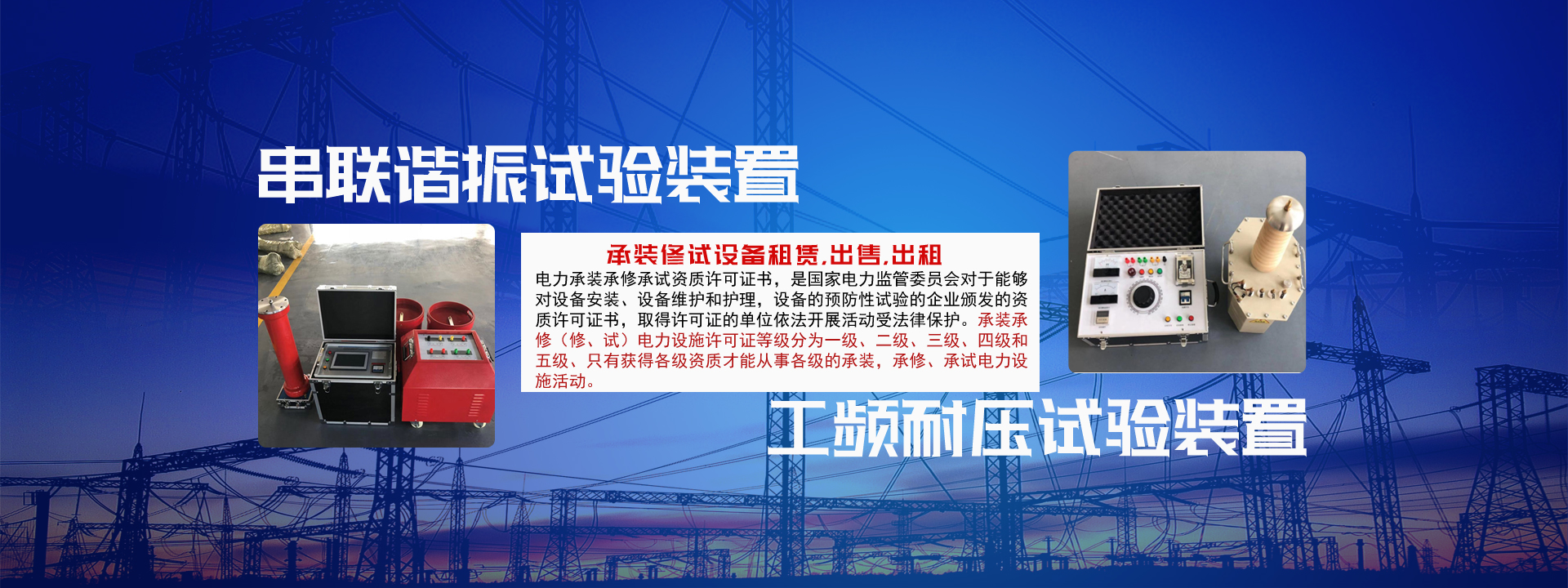
Main Contents of Transformer Characteristic Testing
No-load loss and no-load current test: The transformer is tested without load to determine its iron loss (hysteresis loss and eddy current loss) and no-load current. This helps evaluate the quality of the transformer core.
Short-circuit impedance and load loss test: By applying rated current to one side of the transformer and measuring the voltage drop on the other side, the short-circuit impedance is calculated, and the load loss (copper loss) is measured simultaneously. These data are crucial for evaluating the quality of transformer windings.
Transformation ratio test: Check whether the transformation ratio between the various windings of the transformer is accurate, ensuring it meets design requirements. This is very important for maintaining correct voltage levels in the power system.
Polarity test: Confirm the polarity of the transformer windings to ensure there will be no problems when connected to the power system.
Insulation resistance test: Evaluate the insulation condition between the internal windings of the transformer and between windings and ground, preventing safety accidents caused by insulation failure.
Dielectric strength test: Also known as the withstand voltage test, it is used to check the transformer's ability to withstand overvoltage, ensuring it can still operate safely under abnormal voltage conditions.
Characteristics of the Transformer Characteristic Test Bench
High degree of automation: Modern test benches are usually equipped with computer control systems that can automatically execute various test procedures and provide detailed test reports.
High-precision measurement: Advanced sensors and measurement technologies are used to ensure the accuracy of test results.
User-friendly interface: An easy-to-operate software interface simplifies the setup process, allowing even non-professionals to complete tests smoothly.
Versatility: It can adapt to the testing needs of transformers of different models and capacities.
Application Fields
Transformer characteristic test benches are widely used in various stages of power systems, including installation and commissioning, maintenance and repair, and quality control. They are one of the essential tools for power engineering companies, transformer manufacturers, and large industrial enterprises.
Using a transformer characteristic test bench can not only improve work efficiency and reduce human errors, but also effectively extend the service life of transformers and ensure the stable operation of the power system. Therefore, selecting appropriate test equipment and using it correctly is of great significance for ensuring the safety of the power system.