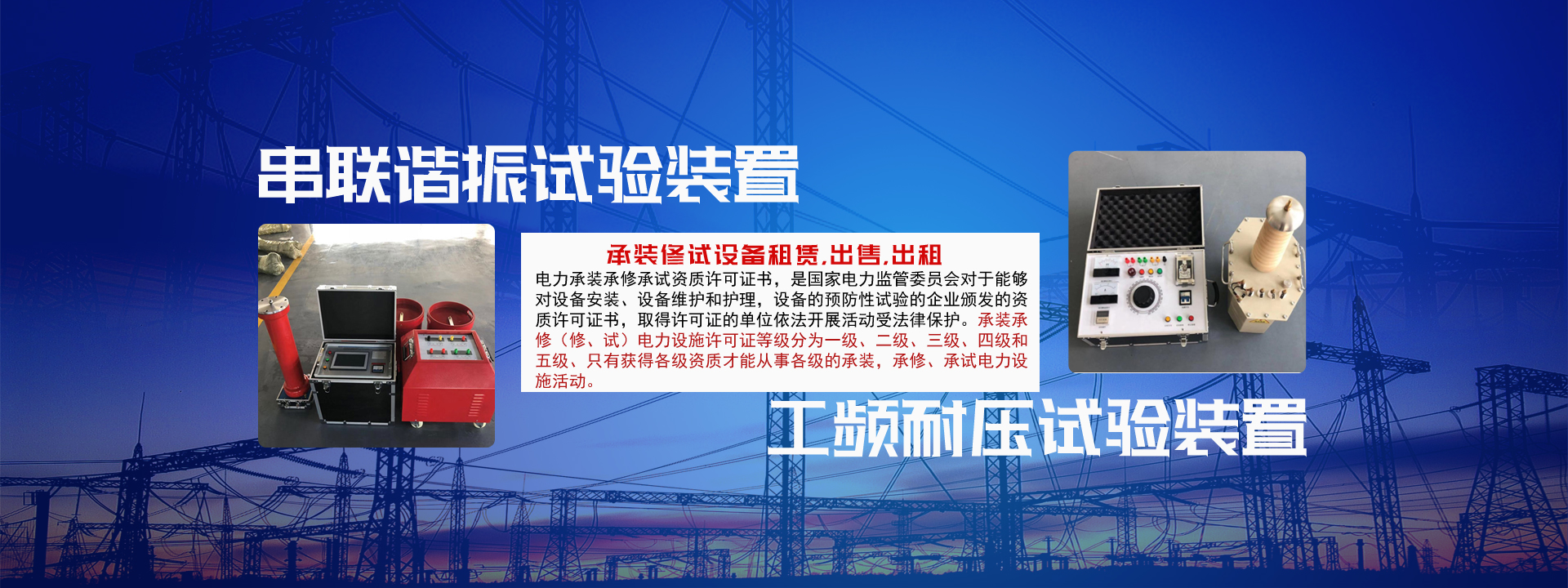
Electrical Characteristic Console (Electrical Characteristic Console/Test Bench) usually refers to a specialized integrated operation platform for testing, analyzing, and verifying the electrical performance parameters of electrical equipment (such as relays, circuit breakers, contactors, instrument transformers, surge arresters, etc.). In the context of the power industry in 2026, this type of equipment has evolved from the traditional "stand-alone instrument combination" into a highly integrated, digital, and automated intelligent testing system, widely used in quality inspection at electrical equipment manufacturing plants, research and development at electric power research institutes, and preventive tests and maintenance sites at power supply bureaus/power plants. The following is an in-depth analysis of the electrical characteristic console: 1. Core Functions and Test Objects The electrical characteristic console is not a single instrument but a comprehensive testing system integrating signal sources, measurement units, control logic, and data analysis software. Main test objects: Relay protection devices: test operating time, operating value, return value, reclosing logic, etc. High-voltage switches/circuit breakers: test opening/closing time, speed characteristics, bounce count, synchronization, coil current waveform. Instrument transformers (CT/PT): test ratio, polarity, excitation characteristics, volt-ampere characteristics, ratio error and phase error. Surge arresters/insulators: test DC reference voltage, leakage current, insulation resistance. Low-voltage electrical apparatus: test contactor pick-up/release voltage, endurance and durability. Core test parameters: Time characteristics: microsecond-level precision measurement of operating/return time. Electrical quantities: high-precision voltage, current (AC/DC), frequency, phase, power. Mechanical characteristics: stroke, speed, acceleration (requires sensors). Waveform analysis: real-time capture and analysis of voltage/current waveforms at the moment of fault. 2. Technology Evolution Trends from 2025 to 2026 With the deepening of smart grids and digital transformation, modern electrical characteristic consoles exhibit the following notable features: A. Full Digitization and Software-Defined Instruments (SDI) Hardware generalization: a large number of traditional independent modules are replaced by high-performance FPGA and ADC/DAC boards. Through software configuration, the same console can switch between a relay tester, a switch characteristic tester, or an instrument transformer tester. High sampling rate: sampling frequency is generally increased to 1MHz - 10MHz, enabling clear capture of transient processes at the millisecond or even microsecond level (such as arc reignition at the moment of contact separation or closure in circuit breakers). B. AI-Assisted Diagnosis and Automatic Criteria Intelligent recognition: built-in AI algorithms can automatically identify the type of device under test and recommend standard test schemes (such as automatically loading national standards GB/T or IEC standard curves). Fault prediction: by analyzing coil current waveforms or mechanical vibration spectra, potential mechanical faults such as mechanism jamming, spring fatigue, or core loosening can be predicted in advance, rather than merely judging "pass/fail". One-click report generation: after the test, an electronic report conforming to State Grid Corporation of China (SGCC) or China Southern Power Grid (CSG) specifications is automatically generated, and can be directly uploaded to the production management system (PMS) or asset lifecycle management platform. C. Multi-Parameter Fusion and Synchronous Testing Electromechanical synchronization: it can simultaneously collect electrical quantities (voltage/current) and mechanical quantities (displacement/speed), and precisely align them on the same time axis to analyze the "electrical-mechanical" coupling relationship (for example, analyzing the delay between the moment the coil is energized and the moment the contact starts moving). Multi-channel parallel: high-end consoles support 12-channel or even 24-channel synchronous input, enabling simultaneous testing of all phases and auxiliary contacts of three-phase circuit breakers, greatly improving on-site efficiency. D. Portability and Explosion-Proof Design Lightweight: using high-strength composite material shells, the weight is reduced by 30%-40% compared to five years ago, suitable for field operations. Special environment adaptation: for chemical, coal mining, and other scenarios, intrinsically safe (Ex i) or flameproof (Ex d) electrical characteristic consoles have been launched to ensure safe testing in flammable and explosive environments.