
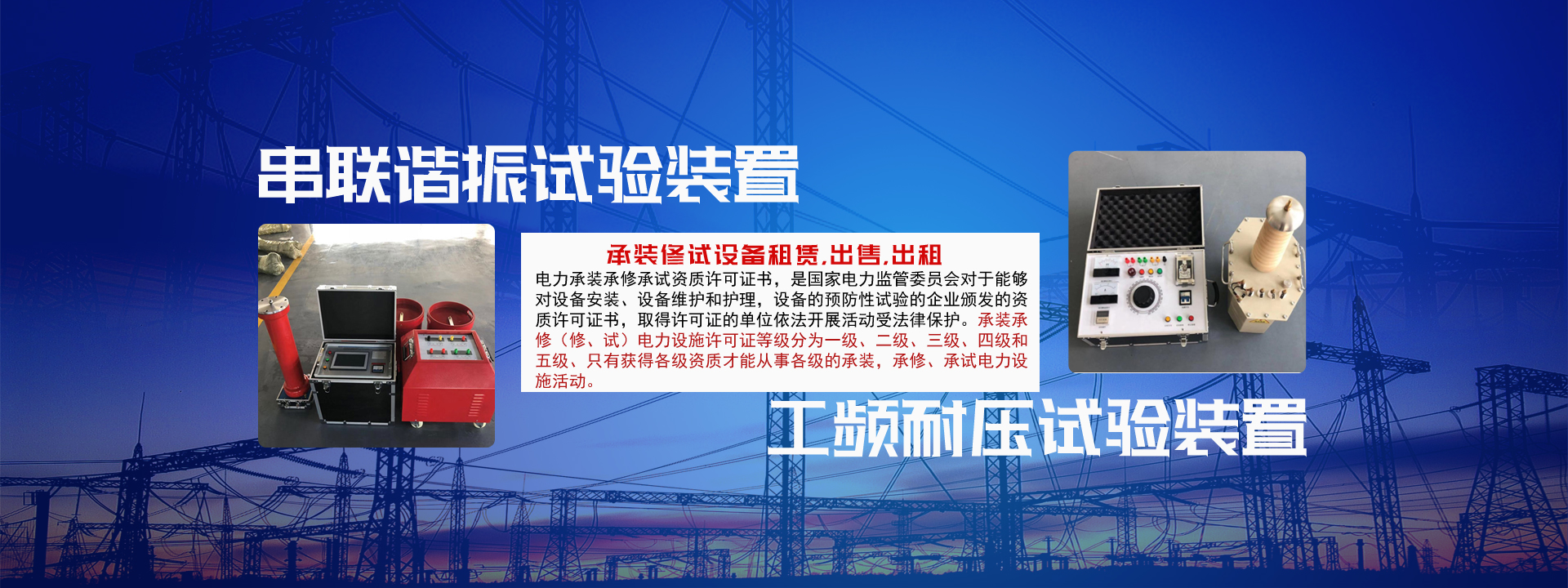
The power frequency withstand voltage test device is one of the important tools used in power systems to evaluate the insulation performance of electrical equipment. By applying power frequency high voltage to test the insulation strength of equipment, it ensures the safe and stable operation of the power system. This article will detail the operation guide of the power frequency withstand voltage test device and demonstrate its application in the power system through practical cases.
1. Introduction
The power frequency withstand voltage test is an important test in the maintenance of power equipment, which can detect the insulation performance of equipment under power frequency high voltage. Correct operation procedures and precautions are crucial to ensure the effectiveness and safety of the test.
2. Introduction to the Power Frequency Withstand Voltage Test Device
The power frequency withstand voltage test device mainly includes the following parts:
Step-up transformer: used to raise the power frequency power supply voltage to the high voltage required for the test.
Voltage regulator: used to adjust the input voltage of the step-up transformer, thereby controlling the magnitude of the output voltage.
Protection circuit: includes overvoltage protection, overcurrent protection, etc., to ensure safety during the test.
Data acquisition and analysis: uses a high-precision data acquisition system to monitor and record test data in real time, and perform analysis and processing.
3. Operation Guide
3.1 Preparation
Check equipment: ensure that the power frequency withstand voltage test device is in good condition, and check that all connecting wires are intact.
Site preparation: choose an appropriate test site, ensuring sufficient space and safety distance.
Safety measures: wear personal protective equipment, such as insulating gloves, insulating shoes, etc.
3.2 Test Steps
Connect equipment: correctly connect the test device and the test object according to the test requirements.
Start the device: turn on the power and start the power frequency withstand voltage test device according to the instructions.
Gradually increase voltage: slowly increase the output voltage until reaching the predetermined test voltage.
Hold time: maintain at the predetermined test voltage for a period of time, usually 1 minute.
Record data: record data such as voltage and current during the test.
Gradually decrease voltage: after the test, slowly reduce the voltage to zero.
3.3 Precautions
Safety first: always put safety first and comply with all relevant safety regulations.
Environmental conditions: ensure the test is conducted under suitable environmental conditions, avoiding the influence of factors such as humidity and temperature.
Repeatability: if the initial test fails, the test should be repeated after eliminating possible causes.
4. Practical Cases
4.1 Transformer Insulation Test
Background: A power company needed to test the insulation performance of a transformer during routine maintenance.
Test content: Use the power frequency withstand voltage test device to conduct a withstand voltage test on the transformer.
Test result: It was found that the insulation performance of one transformer was below the standard requirement, and it was repaired in time.
4.2 Cable Insulation Test
Background: A newly built transmission line required insulation testing of cables.
Test content: Use the power frequency withstand voltage test device to conduct cable insulation tests.
Test result: All cables passed the test, ensuring the safe operation of the transmission line.
5. Conclusion
The power frequency withstand voltage test device, as an important testing tool in the power system, is crucial for ensuring the insulation performance of power equipment. Following correct operation procedures and precautions can ensure the effectiveness and safety of the test, thereby providing strong support for the safe and stable operation of the power system.
This article outlines the operation guide of the power frequency withstand voltage test device and its application cases in the power system. If you need more detailed technical information or other related information, please feel free to let us know.