
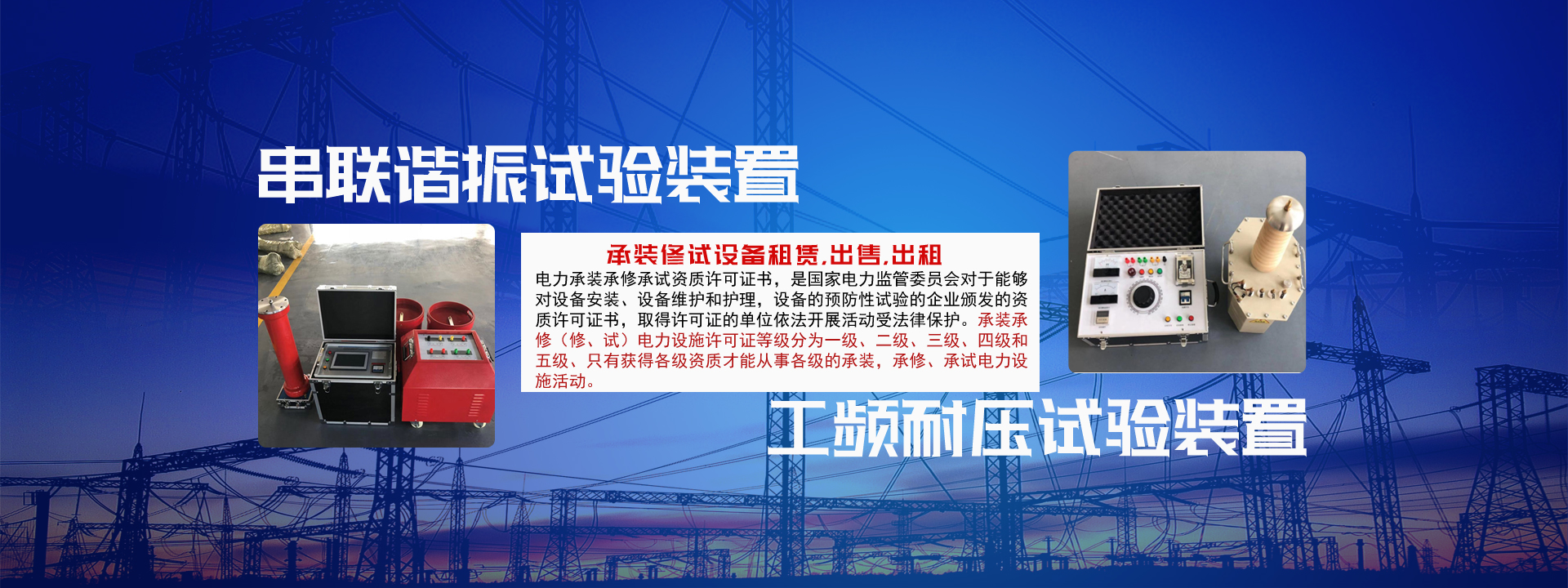
The microcomputer relay protection tester is an indispensable testing tool in modern power systems, used to verify whether the functions of relay protection devices meet design requirements, ensuring the safe and stable operation of the power system. This article will detail the working principle, characteristics, application fields, and precautions for use of the microcomputer relay protection tester.
Working Principle
The microcomputer relay protection tester tests the response of relay protection devices by simulating various fault conditions and operating states. It can generate precise voltage and current signals, and can set different parameters such as frequency, phase angle, and waveform distortion to simulate various fault conditions in actual power systems. The tester is also equipped with data acquisition and analysis software, which can record test data in real time and perform analysis and evaluation.
Characteristics
Multifunctionality: Capable of testing various types of relay protection devices, including overcurrent, undervoltage, frequency, power direction, and other protections.
High precision: Provides high-precision voltage and current signal output, ensuring accurate and reliable test results.
Easy operation: User-friendly interface, enabling technicians to quickly master the usage methods.
Data recording: Automatically records test data, facilitating later analysis and report preparation.
Flexibility: Supports multiple test modes, allowing customization of test plans according to different needs.
Compatibility: Compatible with various types of relay protection devices, adapting to different brands and models.
Application Fields
The application scope of the microcomputer relay protection tester is very wide, including but not limited to:
Power systems: Used for relay protection testing in various power facilities such as substations, power plants, transmission and distribution lines.
Industrial applications: Used for testing protection systems of large motors, transformers, switchgear, and other industrial equipment.
Rail transit: Used for power supply protection testing in subway, railway, and other rail transit systems.
Research and development: Used in the development and testing stages of relay protection devices to verify the performance of new products.
Precautions for Use
To ensure the normal use of the microcomputer relay protection tester and extend its service life, the following points need to be noted:
Familiarize with the manual: Carefully read the user manual before use to ensure understanding of all functions and operating procedures of the instrument.
Safety measures: Comply with all relevant safety regulations to ensure the safety of operators.
Environmental conditions: Keep the instrument working under suitable temperature and humidity conditions, avoiding damage from extreme environments.
Correct connection: Connect test leads correctly according to test requirements, ensuring circuit integrity and accuracy.
Regular calibration: Calibrate the tester regularly to ensure the accuracy of measurement results.
Professional training: For complex testing tasks, it is recommended that operators receive professional training.
Conclusion
The microcomputer relay protection tester is a key tool to ensure the safe and stable operation of power systems. With the continuous improvement of automation levels in power systems, the importance of microcomputer relay protection testers is increasingly prominent. Future technological developments will further enhance the performance and reliability of testers, providing stronger guarantees for the safety of power systems.