
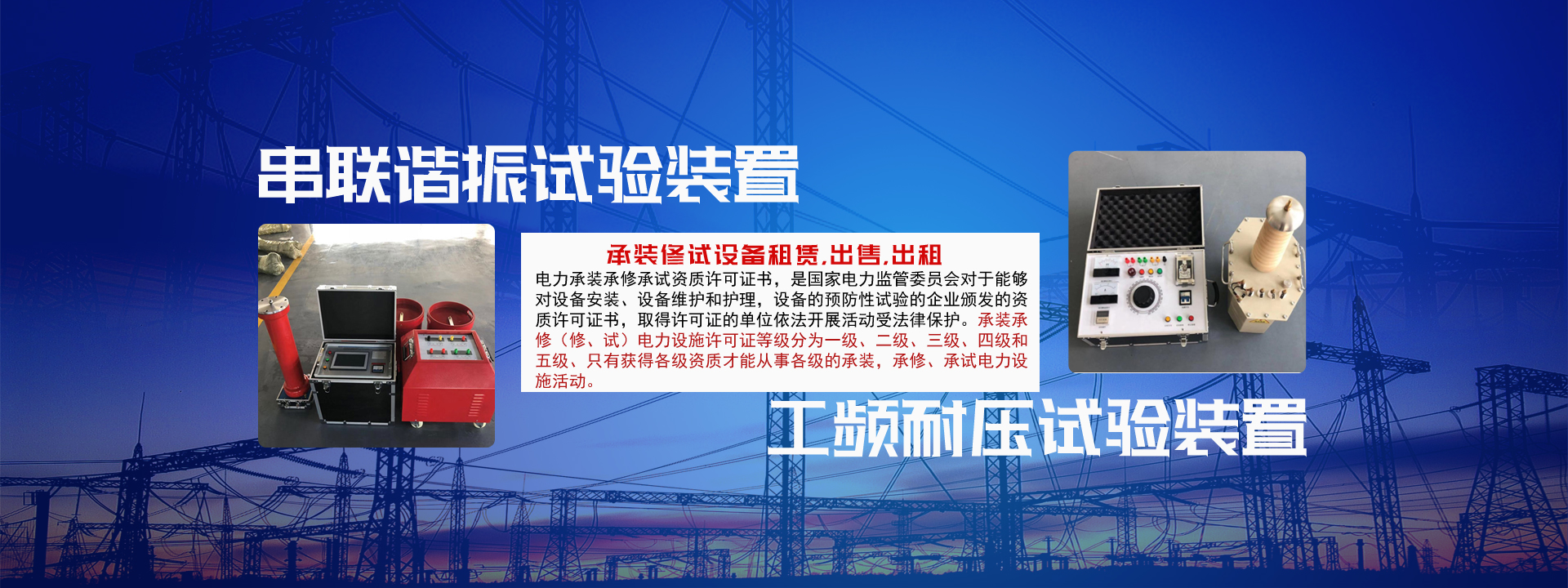
is a key tool for evaluating the insulation strength of electrical equipment. It detects whether the insulation performance of electrical products, power cables, transformers, and other equipment meets safety standards by applying high voltage at power frequency (usually 50Hz or 60Hz). This test is crucial for ensuring the safety of electrical equipment under normal operating conditions.
Main Uses
Electrical equipment inspection: Used for insulation performance inspection of newly manufactured electrical equipment before leaving the factory.
Maintenance and repair: Regular inspection of electrical equipment already in use to detect potential insulation defects and prevent failures.
Research and experimentation: Helps engineers study the insulation characteristics of different materials and designs, optimizing product design.
Working Principle
The power frequency withstand voltage test device mainly consists of a voltage regulator, a step-up transformer, and a control circuit. First, the voltage regulator adjusts the input mains voltage to an appropriate level, and then the step-up transformer raises it to the required test voltage. The equipment under test is kept under this high voltage for a certain period (usually 1 minute) to observe whether breakdown or other abnormal phenomena occur. If the equipment can withstand the voltage without breakdown, its insulation performance is considered qualified.
Features and Functions
High voltage output: Can provide voltage ranges from several kilovolts to hundreds of kilovolts, adapting to the testing needs of different equipment.
Precise control: Equipped with a precision control system that can accurately adjust the output voltage and monitor voltage and current parameters in real-time during the test.
Protection mechanisms: Has multiple protection functions, such as overcurrent protection and short-circuit protection, ensuring the safety of operators and equipment.
High degree of automation: Modern power frequency withstand voltage test devices often use computer control, supporting automatic testing, data recording, and analysis functions.
Development Trends
With the development of technology, power frequency withstand voltage test devices are moving towards more intelligent, portable, and multifunctional directions. For example, some new devices integrate wireless communication technology, making remote monitoring and data analysis possible; at the same time, to facilitate on-site use, manufacturers are also striving to reduce device size and weight, improving portability. In addition, user interfaces are becoming more user-friendly, and complex testing tasks can be completed through touch screen operation.
In summary, the power frequency withstand voltage test device is an important tool for ensuring the insulation performance of electrical equipment, and it is of great significance for improving product quality and ensuring the stable operation of the power grid. Whether it is electrical equipment manufacturers, power companies, or scientific research institutions, they all rely on the support of such equipment. With technological progress, these devices will continue to evolve and better serve various application scenarios.