
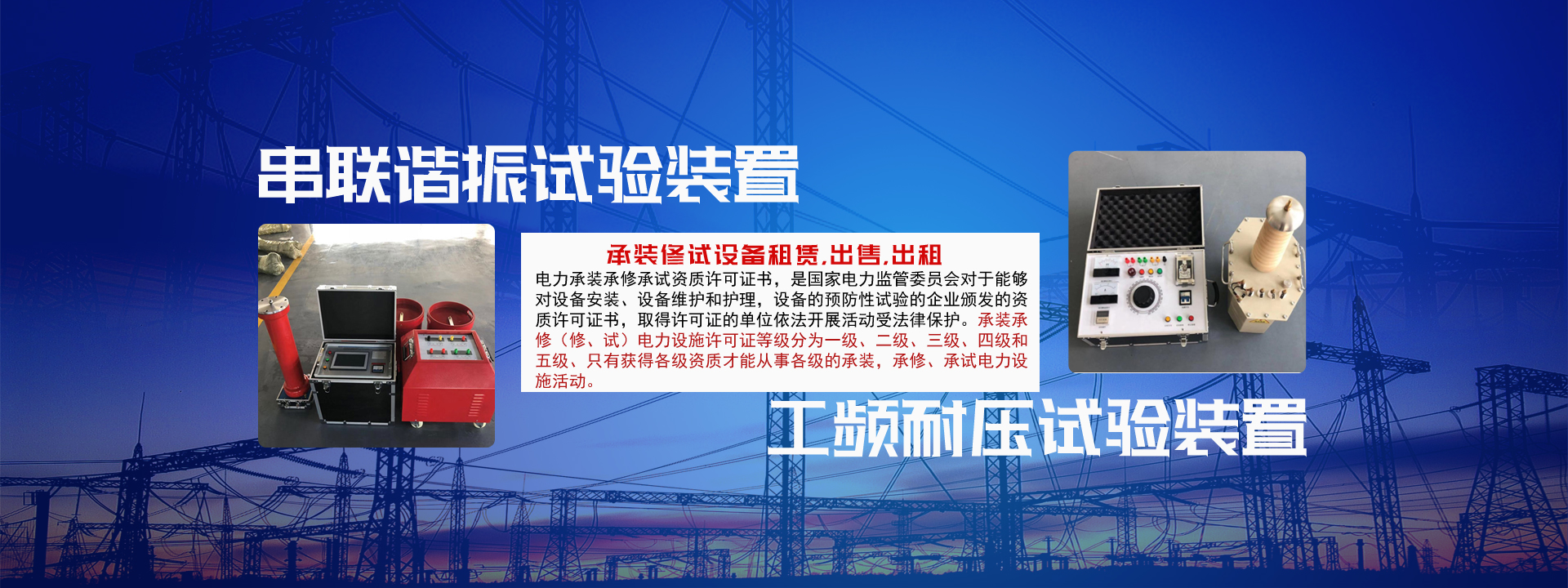
is a key test equipment used to detect the insulation performance of electrical equipment. It applies high voltage at power frequency (usually 50Hz or 60Hz) to test the insulation capability of the tested object under rated working voltage, ensuring that it can work safely and stably in the actual operating environment. This test is of great significance for preventing electrical accidents in the power system.
Main Components
Control part: responsible for the control and monitoring of the entire test process, including voltage regulation, overcurrent protection, and other functions.
Step-up transformer: converts the input low voltage into the required high voltage for testing.
Voltage regulator: used to adjust the output voltage to meet different test requirements.
Measurement system: includes instruments such as voltmeters and ammeters to monitor voltage and current changes during the test.
Protection system: automatically cuts off the power supply when abnormal conditions (such as overcurrent or overvoltage) are detected, protecting the safety of equipment and personnel.
Application Fields
Power industry: regular inspection and maintenance of power transformers, cables, circuit breakers, and other equipment.
Manufacturing: quality inspection of motors, electrical products, etc., before leaving the factory during the manufacturing process.
Research institutions: used for R&D testing of new materials and new technologies, evaluating their insulation performance.
Technology Development Trends
With the advancement of technology, power frequency withstand voltage test devices are also continuously developing:
Increased automation: modern devices are often equipped with computer control systems, enabling automatic voltage application, data collection and analysis, automatic report generation, and other functions.
Enhanced safety: in addition to traditional overcurrent and overvoltage protection, multiple safety measures such as emergency stop buttons and leakage protection have been added.
Miniaturization and portability: to facilitate on-site operations, the design tends to be more compact and lightweight, making it easy to carry to different test locations.
Selection Suggestions
When purchasing a power frequency withstand voltage test device, factors to consider include but are not limited to maximum output voltage, current capability, stability, accuracy, and compliance with relevant national standards. In addition, considering the safety and convenience of operation, it is recommended to choose products that provide a good user interface and support remote control functions.
By correctly using the power frequency withstand voltage test device, potential safety hazards in electrical equipment can be effectively detected, and corresponding measures can be taken to repair or replace them, ensuring the safe and reliable operation of the power system.