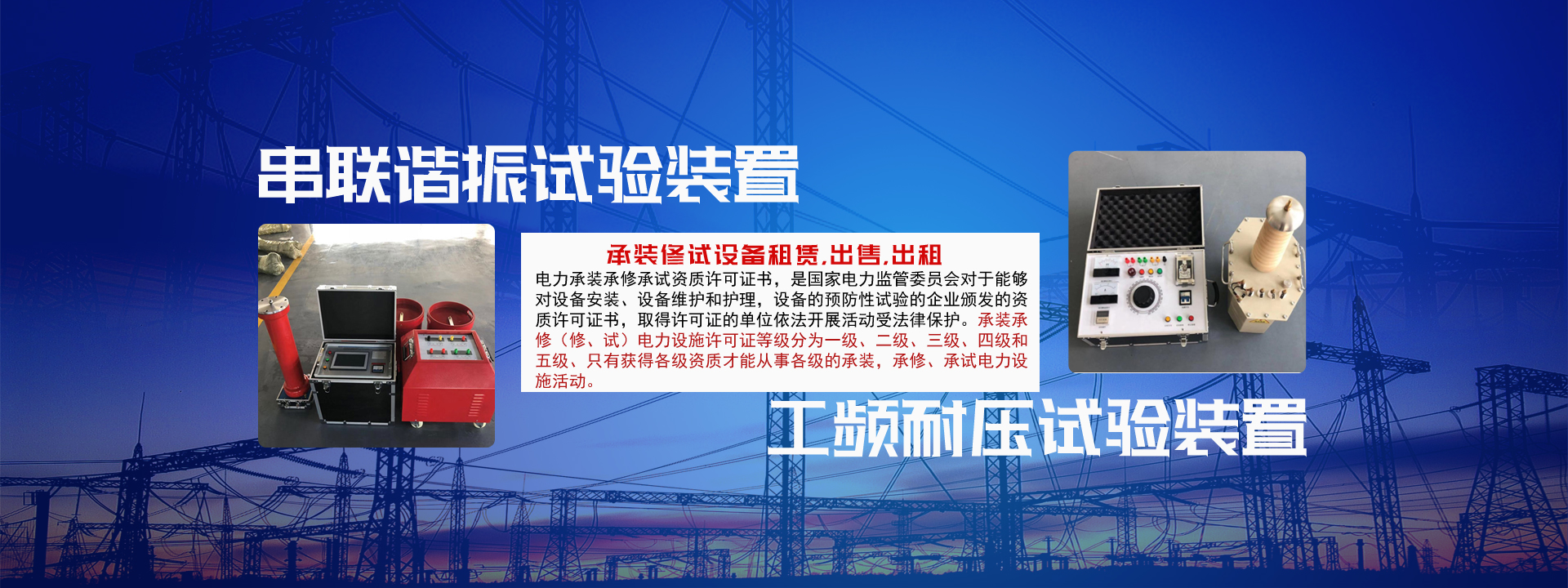
The operation center of the power frequency withstand voltage test device is responsible for connecting to the mains supply
The power frequency withstand voltage test device (also often referred to as "withstand voltage tester", "power frequency withstand voltage machine" or "test transformer") is the "ultimate examiner" of the insulation performance of electrical equipment. Its core function is very simple and direct: it applies a power frequency (50Hz) high voltage far exceeding the normal working voltage of the electrical equipment to the equipment, and maintains it for a specified period of time, in order to assess whether the insulation materials and structure of the equipment are sufficiently reliable and can withstand possible overvoltages in the power grid.
⚡ Core Working Principle and Composition
The essence of the power frequency withstand voltage test device is a step-up transformer. It converts ordinary mains electricity (220V or 380V) into power frequency high voltage of several thousand volts or even hundreds of kilovolts through the principle of electromagnetic induction, and directly conducts insulation strength tests on the test object.
A standard power frequency withstand voltage test device usually consists of the following core components:
Control console (voltage regulation control system): The operation center of the device. It is responsible for connecting to the mains supply, and smoothly adjusts the voltage through a voltage regulator (such as an electric column-type voltage regulator). It also integrates voltage and current display, timing, and safety protection functions such as overcurrent, overvoltage, and zero-position start.
Test transformer: The heart of the device. It is responsible for boosting the low voltage output from the control console to the high voltage required for the test.
High voltage measurement system: Usually uses a capacitive or resistive-capacitive voltage divider to accurately measure the actual voltage applied to the test object on the high voltage side, preventing inaccurate voltage measurement due to the "capacitive rise phenomenon".
Protective resistor: Connected in series in the high voltage circuit. When the test object breaks down or flashes over, it limits the short-circuit current and protects the test transformer from being burned out.

- Home
- About Us
- Products
- Series Resonance Test Device
- Power Frequency Withstand Voltage Device
- Electrical Characteristic Console
- High Current Generator
- Transformer Characteristic Test Bench
- Transformer Ratio Tester
- Triple Frequency Generator
- CT/PT Characteristic Tester
- Cable Fault Tester
- Dielectric Loss Tester
- Capacitance/Inductance Tester
- Partial Discharge Tester
- Microcomputer Relay Protection Tester
- ZnO Arrester Tester
- Transformer Capacity Characteristic Tester
- Company News
- Industry Trends
- Messages
- Contact Us
☎
Service Hotline18952707000