
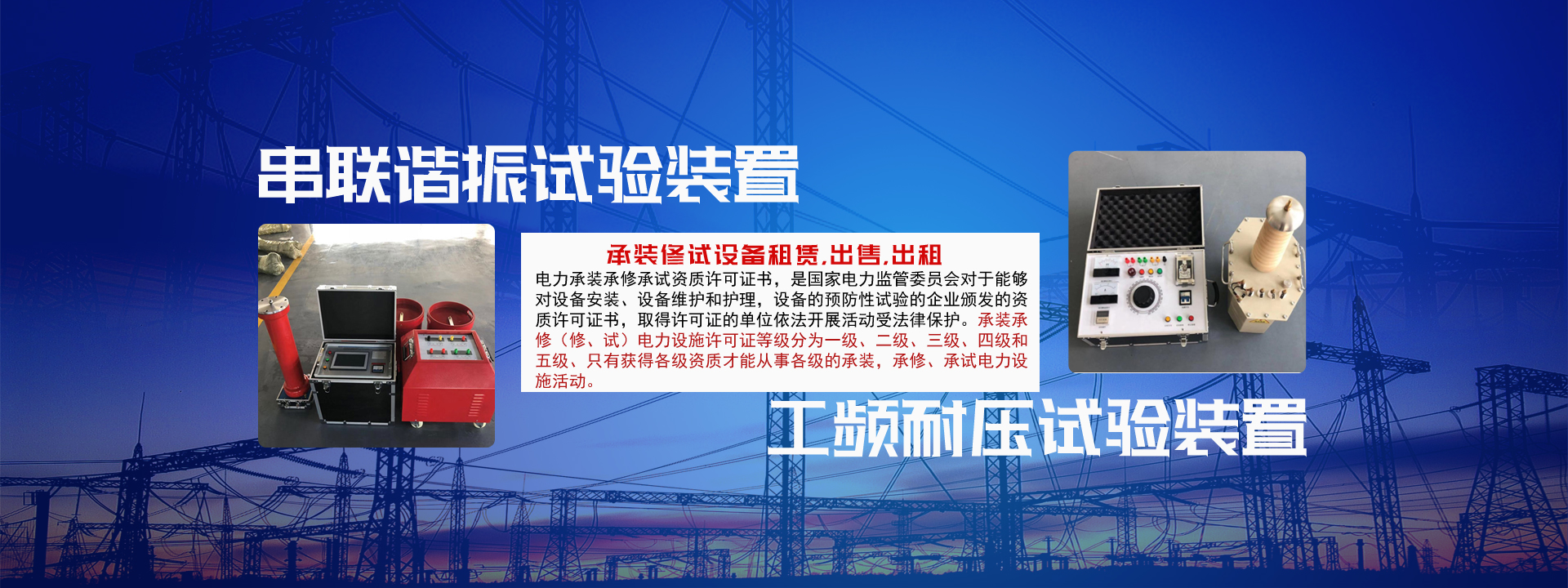
As power systems become increasingly complex, the requirements for testing and maintaining electrical equipment are also rising. The electrical characteristics console, as a multifunctional integrated testing platform, can meet the testing needs of various electrical characteristics in power systems, ensuring stable operation and efficient performance.
II. Definition and Composition
The electrical characteristics console is typically an integrated testing system that includes various tools for measuring, monitoring, and adjusting the electrical characteristics of power equipment. Common components include:
Power module: Provides stable AC or DC power.
Signal generator: Used to generate voltage and current signals required for testing.
Measurement unit: Includes voltmeters, ammeters, power meters, etc., for recording test data.
Control and display unit: Provides a user interface that allows users to set test parameters and view results.
Data processing and storage unit: Can record test data, and some also have data processing functions such as fault diagnosis analysis.
III. Main Functions
Electrical characteristic measurement: Can measure electrical parameters such as voltage, current, frequency, phase angle, and power factor.
Harmonic analysis: Detects harmonic content in power systems and evaluates power quality.
Relay testing: Used to test the operating characteristics of protective relays, ensuring the reliability of relay protection systems.
Fault diagnosis: Helps engineers diagnose problems in power systems, such as short circuits and ground faults.
Equipment calibration: Can be used to calibrate other measuring instruments or power equipment.
IV. Application Scenarios
The electrical characteristics console has wide applications in power systems:
Power companies: Used for daily maintenance and fault troubleshooting of substations and transmission lines.
Manufacturing: For quality control on production lines of motors, generators, transformers, and other products.
Research institutions: Supports research and development in power systems, such as studies on integrating new energy into the grid.
Education: Used for teaching practice to help students understand the actual working principles of power systems.
V. Usage Case
For example, at a power company's substation, technicians used an electrical characteristics console to conduct a comprehensive electrical characteristic test on a transformer. By analyzing parameters such as voltage, current, and harmonics, they identified potential issues and accordingly formulated a maintenance plan, improving system reliability.
VI. Development Trends
With technological advancements, future electrical characteristics consoles will become more intelligent, integrated, and equipped with more advanced functions:
Intelligence and remote monitoring: By integrating IoT technology, remote data collection and analysis can be achieved.
Multifunctional integration: Integrating more testing functions into one platform to reduce equipment footprint.
User-friendly interface: Adopting modern interface designs such as touchscreens to enhance user experience.
Energy-saving and environmentally friendly design: Using high-efficiency designs to reduce energy consumption and minimize environmental impact.
VII. Conclusion
The electrical characteristics console, as a core tool for testing and maintenance in power systems, is of undeniable importance. With technological development, these consoles will become more intelligent, portable, and possess stronger data processing capabilities and remote monitoring functions, providing stronger support for the safety and efficiency of power systems.
This article provides an overview of the basic concepts, functional features, application cases, and future development trends of the electrical characteristics console. The specific content can be further expanded or adjusted based on actual needs. If there are any specific requirements or topics that need further discussion, please feel free to let us know.