
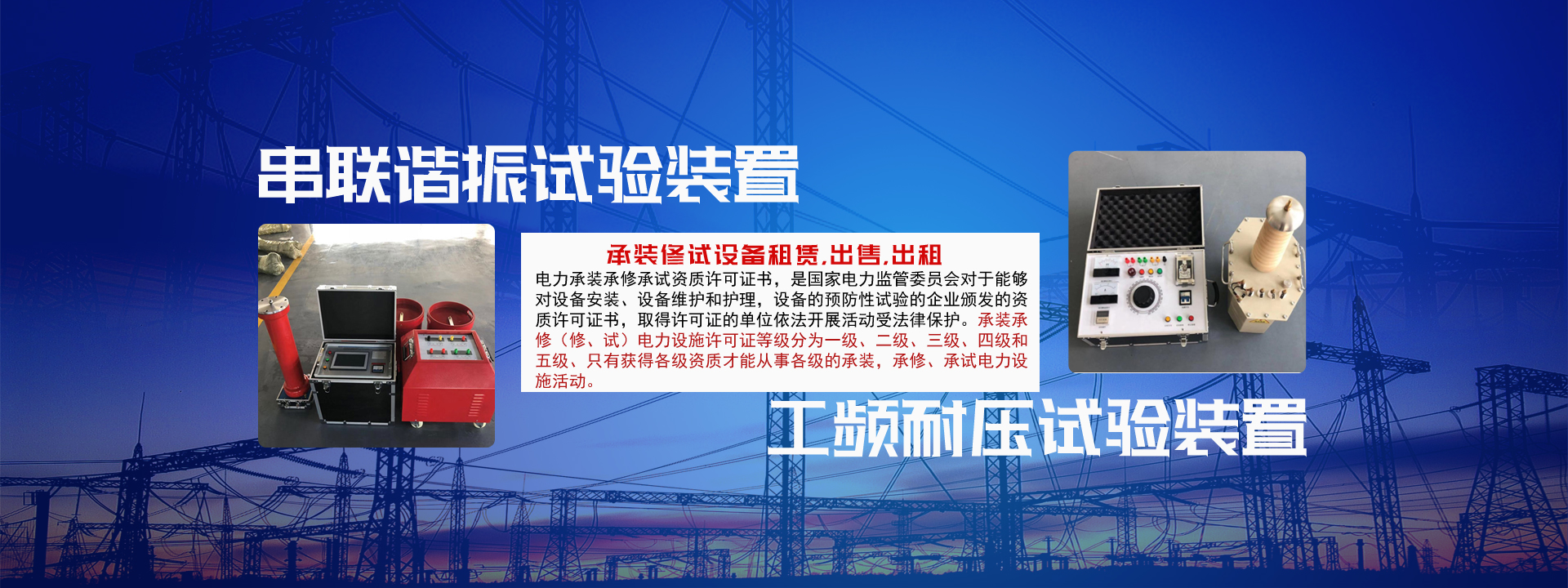
It is the core equipment used in power preventive tests to detect the mechanical performance and electrical action characteristics of high-voltage circuit breakers (vacuum, SF6, oil circuit breakers) and disconnectors.
Its main task is to ensure that the switchgear operates with accurate timing, proper speed, and three-phase synchronization during opening and closing operations, preventing refusal to operate, misoperation, or even explosion accidents caused by mechanical jamming, abnormal speed, or desynchronization.
Combined with the latest technology trends of 2025-2026, here is a detailed analysis of this equipment:
1. Core Test Functions
Modern apparatus characteristic consoles integrate high-precision sensors and high-speed data acquisition systems, mainly testing the following key parameters:
Time Parameters:
Opening/Closing Time: Time from coil energization to contact separation/contact.
Three-Phase Desynchronization: Time difference among three-phase contact actions (key indicator, usually required to be <2ms).
Same-Phase Break Desynchronization: Internal synchronization of double-break or multi-break circuit breakers.
Bounce Time and Count: Duration and count of contact bounce during closing (especially critical for vacuum circuit breakers).
Speed Parameters:
Instantaneous Separation/Contact Speed: Speed at the moment of contact separation/contact.
Maximum Speed, Average Speed.
Speed Curve: Real-time plotting of "stroke - time" and "speed - time" curves.
Stroke Parameters:
Total Stroke, Overtravel (Contact Stroke), Open Gap.
Operating Mechanism Characteristics:
Opening/Closing Coil Current Waveform: Analyze whether the coil is short-circuited, open-circuited, or the iron core is jammed.
Low Voltage Operation Test: Test operation at 30%, 65%, 85% of rated voltage.
Charging Motor Test: Monitor motor starting current and charging time.
Special Functions:
Reclosing Test: Simulate complex operation sequences such as "open-close-open".
Manual Trigger/External Trigger: Supports multiple trigger modes.
2. Mainstream Technology Features in 2025-2026
The new generation of consoles is developing towards intelligence, multi-function integration, and anti-interference:
Table
Technology Dimension Typical Specifications and Highlights (2026 Model) Description
Sensor Technology Universal Sensor / Linear Resistive Sensor / Rotary Encoder Supports multiple installation methods (adhesive, strap-on), adaptable to almost all circuit breaker models without special brackets. Accuracy up to 0.1mm.
Time Resolution 0.01 ms (10 microseconds) Extremely high precision to capture millisecond-level action differences, meeting UHV equipment testing requirements.
Number of Channels 12 to 16 channels (or even more) Can simultaneously test multiple breaks, phases, and auxiliary contacts, supporting complex GIS combined apparatus testing.
Control Power Supply 0-300V / 0-20A (adjustable) Built-in high-power DC/AC power supply, can directly drive various electromagnetic operating mechanisms without external voltage regulator.
Anti-Interference and Synchronization GPS/Beidou time synchronization Ensures absolute unified time reference during multi-device joint testing or long-distance testing; strong anti-electromagnetic interference capability.
Intelligent Analysis AI Fault Diagnosis Built-in expert database, automatically judges fault causes such as mechanism jamming and iron core looseness based on current waveform and speed curve.
Human-Machine Interface 10-inch+ industrial touch screen Graphical interface, real-time dynamic display of action process, supports one-click generation of test reports conforming to State Grid/Southern Grid standards.
3. Representative Models and Manufacturers (2026 Reference)
A. Comprehensive/High-End Laboratory Use
Wuhan Moen (MOEORW) - MEKG-8000 Series
Features: 12 break inputs, built-in 300V/20A power supply, GPS synchronization, equipped with universal sensors, suitable for testing circuit breakers of 500kV and above.
Wuhan Huatian Electric Power - HTGK-9000
Features: Large color screen, built-in printer, powerful waveform analysis function, supports custom definition of "instantaneous separation/contact" speed.
Yangzhou Haiwo Electric - HWKG-III
Features: Lightweight design but powerful functions, extremely convenient sensor installation, suitable for on-site mobile operations.
B. Portable/On-Site Inspection Use
Guodian Xigao - GDKG-808
Features: Small size, light weight (<5kg), long battery life, suitable for rapid inspection of 10kV-35kV switches in distribution networks.
Shanghai Sute - STKG-V
Features: High cost-performance, simple operation interface, focuses on basic time and speed testing.
4. Purchase Recommendations
Voltage Level Matching:
10kV-35kV: Choose portable type, 6-8 channels are sufficient, focus on sensor installation convenience.
110kV-500kV: Must choose high-end models, requiring 12 or more channels (to handle multi-break), and built-in power supply with high power (to drive large hydraulic/spring mechanisms).
Sensor Compatibility: Confirm whether the instrument is equipped with universal sensors (linear + rotary) as standard, which can solve the problem of difficulty in installing sensors on old or special-structure circuit breakers.
Power Output Capability: Check the current output capability of the built-in power supply. Old electromagnetic mechanisms require large starting current (>10A); if the instrument's load capacity is insufficient, testing may fail.
Software Functions: Prioritize instruments that support waveform comparison analysis, allowing overlay comparison of current test waveforms with historical data to quickly identify hidden dangers.
Standard Compliance: Ensure compliance with the latest standards such as GB/T 11022, DL/T 846.3.
5. Market Price Reference
Basic Portable Type (6 channels, simple sensors): Approximately 12,000 - 25,000 RMB.
Standard Professional Type (12 channels, universal sensors, built-in high-power power supply): Approximately 25,000 - 45,000 RMB.
High-End Intelligent Type (16+ channels, GPS synchronization, AI diagnosis): Approximately 50,000 - 80,000 RMB.
6. Testing Precautions
Safety First: Before testing, confirm that there is no voltage on both sides of the circuit breaker and disconnect the control circuit protection pressure plate.
Sensor Installation: The sensor must be firmly fixed to avoid sliding during high-speed movement causing data distortion (this is the most common source of error).
Grounding: The instrument housing and circuit breaker base must be reliably grounded.
Anti-Back-Charging: For mechanisms with capacitor energy storage, pay attention to discharge after testing.