
Withstand voltage test refers to the test of the voltage withstand capability of various electrical devices, insulating materials, and insulation structures. The process of applying high voltage to insulating materials or insulation structures without damaging their performance is called a withstand voltage test. Generally speaking, the main purpose of the withstand voltage test is to check the ability of insulation to withstand working voltage or overvoltage, thereby verifying whether the insulation performance of the product equipment meets safety standards.
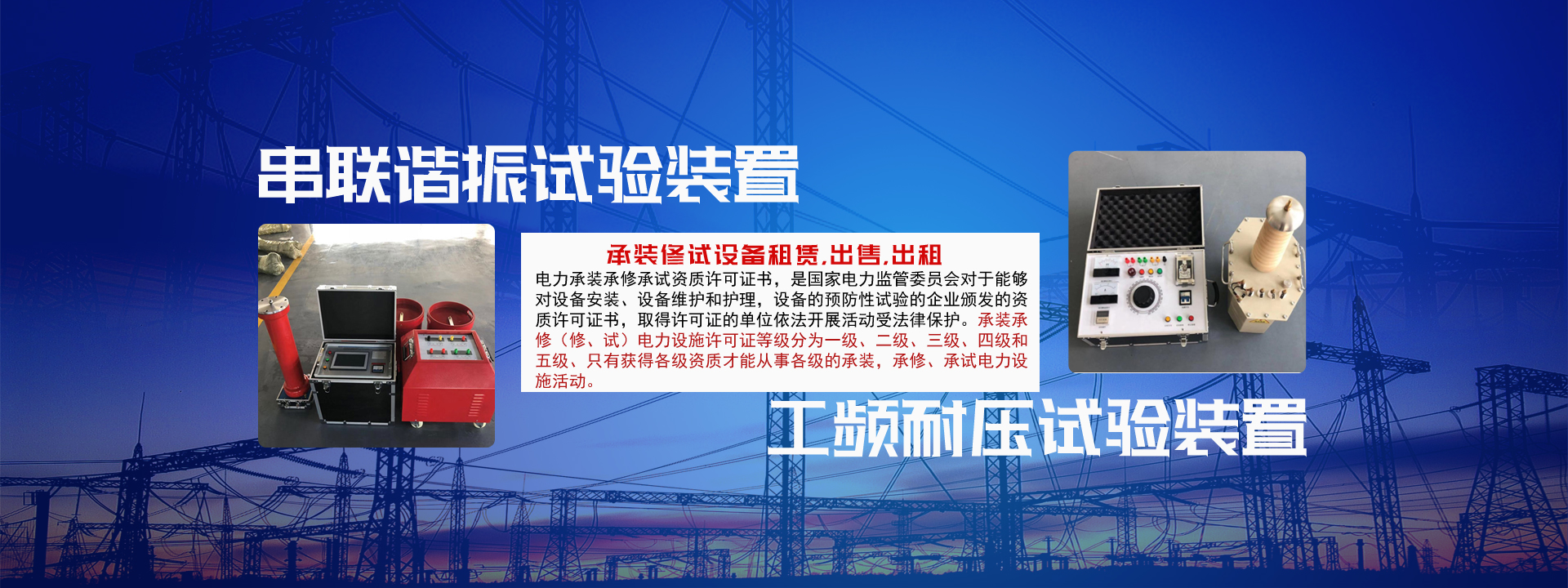
The power frequency withstand voltage tester, also known as a step-up transformer, is a basic test device for power stations, power supply and distribution systems, scientific research institutions, and other users. It is used to conduct insulation strength tests at specified voltages on various electrical products, electrical equipment, insulating materials, etc., to assess the insulation level of products, discover insulation defects in test objects, and measure their ability to withstand overvoltage. This instrument has multiple voltage levels (3-200KV) and capacities (1-100KVA) for selection, and is widely applicable for power frequency withstand voltage tests in industries such as high and low voltage motors, high and low voltage electrical appliances, instruments and meters, household appliances, and relays. Its technical indicators fully comply with the requirements of standards such as GB1497-85 and GB755-87 for power frequency withstand voltage tests in the motor and electrical appliance industries.
The power frequency withstand voltage tester is a high-performance withstand voltage test device designed according to national power industry standards. It is used to conduct insulation strength tests at specified voltages on various electrical products, electrical components, insulating materials, etc., to assess the insulation level of products, discover insulation defects in test objects, and measure their ability to withstand overvoltage. The operation of the power frequency withstand voltage tester requires users to strictly follow relevant specifications, and the key steps include:
1. Set up the site according to relevant regulations, connect the equipment wiring, and if conditions permit, have dedicated safety personnel on site for guidance.
2. Before operation, adjust the current relay (A) according to the capacity and voltage level of the test object.
3. Before operation, adjust the AC/DC voltage output according to the test object's requirements. For AC testing, switch the button upward to perform AC test; for DC testing, in the stop state, switch the button downward to start the voltage regulator for DC testing.
4. Close the power switch, press the start button to engage the contactor, the voltage regulator becomes energized, the stop indicator light goes out, and the start indicator light turns on. At this point, the voltage withstand test can be carried out.
5. Turn the voltage regulator handle clockwise while closely watching the voltmeter (increase voltage at a rate of 1KV per second). When the voltage reaches the specified withstand voltage value for the test object, press the timing button promptly and closely observe the condition of the test object.
6. When the specified withstand voltage time for the test object is reached, an alarm will sound from the console (box), indicating that the test object has passed the withstand voltage test. At this time, turn the voltage regulator handle counterclockwise to return the voltage regulator to zero, then press the stop button to cut off the power.
7. If the test object shows no abnormality during the specified withstand voltage time, it indicates that the test object has passed the withstand voltage test. At this time, turn the voltage regulator handle counterclockwise to return the voltage regulator to zero, then press the stop button to cut off the power.
8. During the voltage increase or withstand voltage test, if overvoltage occurs, promptly turn the voltage regulator knob counterclockwise to bring the voltage back to the specified value.